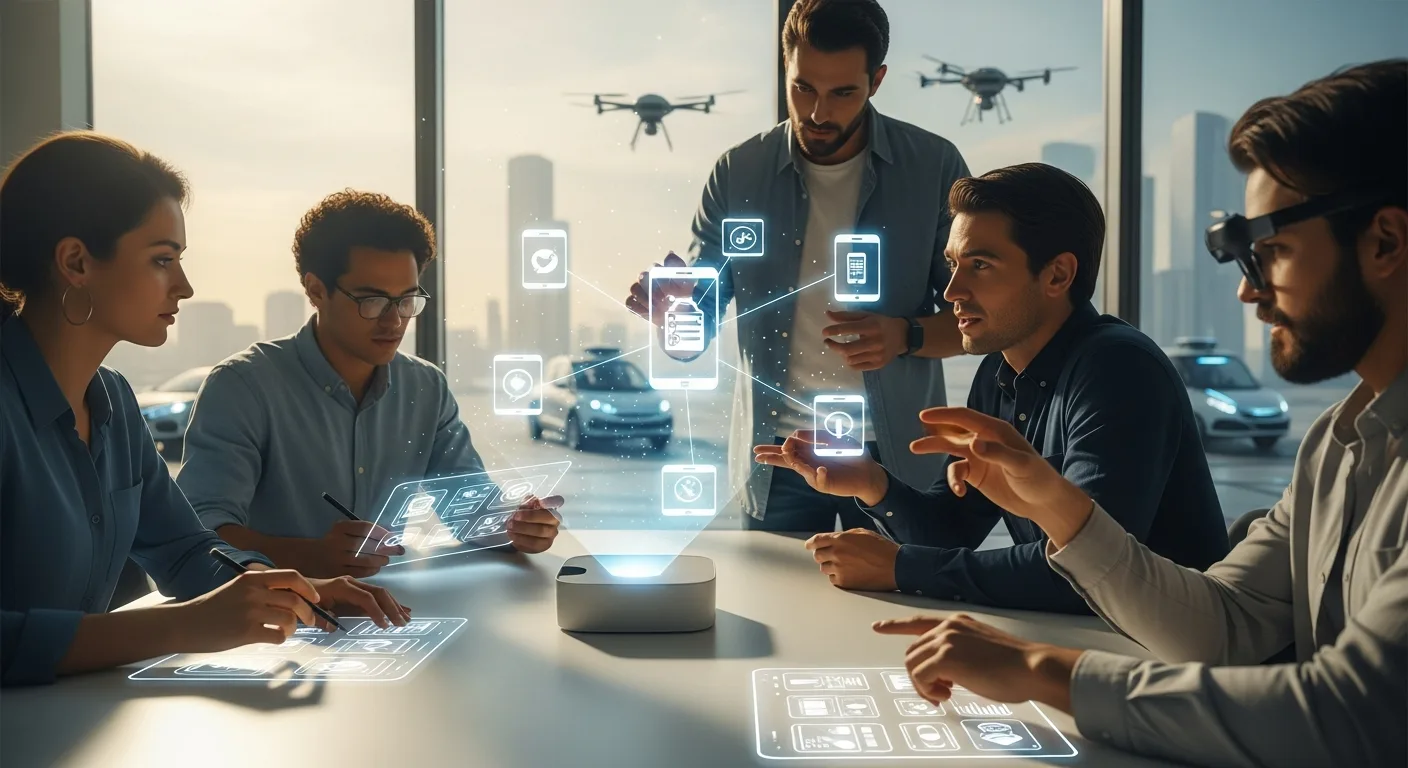
Predicting the App Ecosystem in 2026: Key Trends and Opportunities
The app ecosystem has exploded over the past decade, transforming how we work, communicate, and entertain ourselves. In 2026, this evolution continues at an accelerated pace, driven by advancements in AI, immersive technologies, and ever-increasing user expectations. Understanding these shifts is crucial for developers, businesses, and anyone looking to thrive in the digital age. But with so many emerging technologies vying for attention, how do you cut through the noise and identify the trends that will truly shape the future of apps?
AI-Powered Personalization: The Rise of Hyper-Relevant Experiences
One of the most significant mobile app trends we’re seeing in 2026 is the pervasive integration of artificial intelligence. No longer a novelty, AI is now the engine driving hyper-personalization. Users expect apps to anticipate their needs, offering tailored content, proactive recommendations, and seamless user experiences.
- Predictive Analytics: Apps leverage advanced machine learning algorithms to analyze user behavior, predicting future actions and preferences. For example, a fitness app might suggest a specific workout routine based on your past performance, sleep patterns, and even the weather forecast.
- AI-Driven Content Curation: News aggregators and content platforms use AI to filter and prioritize information, ensuring users see only the most relevant and engaging content. This goes beyond simple keyword matching, considering factors like sentiment analysis and topic modeling.
- Intelligent Assistants: Chatbots and virtual assistants are becoming increasingly sophisticated, capable of handling complex tasks like booking travel, managing finances, and providing customer support. IBM‘s Watson is a prime example of the type of AI that will continue to fuel these advancements.
- Personalized Pricing and Offers: E-commerce apps are using AI to dynamically adjust prices and offer personalized discounts based on individual user profiles. This can lead to increased conversion rates and customer loyalty, but also raises ethical concerns about fairness and transparency.
To succeed in this AI-driven landscape, developers must prioritize data privacy and security, ensuring that user data is collected and used responsibly. Transparency is key. Users need to understand how their data is being used to personalize their experience.
Based on my experience developing personalized learning apps, users are far more receptive to AI-powered features when they understand the rationale behind them and have control over their data.
Immersive Experiences: Augmented and Virtual Reality Take Center Stage
Technology predictions consistently point to the growing importance of augmented reality (AR) and virtual reality (VR) in the app ecosystem. While VR has found a niche in gaming and entertainment, AR is rapidly expanding into various industries, transforming how we interact with the physical world.
- AR-Enhanced Shopping: Retail apps use AR to allow users to virtually “try on” clothes, visualize furniture in their homes, or see how makeup products would look on their faces. This enhances the shopping experience and reduces the likelihood of returns.
- AR-Powered Navigation: Navigation apps overlay directions and points of interest onto the real world, making it easier to find your way around. This is particularly useful in urban environments and for visually impaired individuals.
- VR Training and Education: VR simulations provide immersive training environments for surgeons, pilots, and other professionals, allowing them to practice complex procedures in a safe and controlled setting. Educational apps use VR to bring history and science to life, offering students engaging and interactive learning experiences.
- The Metaverse Integration: Apps are increasingly becoming portals to interconnected virtual worlds, allowing users to socialize, collaborate, and participate in virtual events. The concept of the metaverse, powered by blockchain technology and decentralized platforms, continues to evolve and shape the future of digital interactions.
The key to successful AR and VR app development is to create experiences that are truly useful and engaging, rather than just gimmicky. Focus on solving real-world problems and providing tangible benefits to users. High-quality content and seamless integration with existing workflows are essential.
The No-Code/Low-Code Revolution: Democratizing App Development
The rise of no-code and low-code platforms is democratizing app development, allowing individuals and businesses to create custom applications without extensive programming knowledge. This trend is accelerating the pace of innovation and empowering citizen developers to solve their own unique problems.
- Rapid Prototyping: No-code tools enable rapid prototyping, allowing developers to quickly create and test new app ideas. This reduces the time and cost of development, making it easier to experiment and iterate.
- Custom Business Applications: Businesses are using low-code platforms to build custom applications that streamline internal workflows, automate tasks, and improve employee productivity. These applications can be tailored to specific needs and integrated with existing systems. Salesforce is a major player offering low-code solutions for businesses.
- Citizen Developer Empowerment: No-code platforms empower citizen developers – individuals with domain expertise but limited programming skills – to create applications that solve their own problems. This can lead to increased efficiency and innovation within organizations.
- AI-Assisted Development: AI is being integrated into no-code and low-code platforms, providing intelligent assistance to developers. This includes features like automated code generation, bug detection, and performance optimization.
While no-code and low-code platforms offer many advantages, it’s important to consider their limitations. Complex applications may still require traditional coding. Security and scalability are also important considerations.
The Web3 Integration: Decentralization and User Ownership
The principles of Web3 – decentralization, user ownership, and blockchain technology – are increasingly influencing the app ecosystem. Apps are incorporating blockchain-based features to enhance security, transparency, and user control.
- Decentralized Finance (DeFi): DeFi apps provide access to financial services without intermediaries, allowing users to borrow, lend, and trade cryptocurrencies directly. These apps are often built on blockchain platforms like Ethereum and offer greater transparency and control than traditional financial institutions.
- Non-Fungible Tokens (NFTs): NFTs are being used to represent ownership of digital assets, such as artwork, music, and virtual real estate. Apps are incorporating NFT integration to allow users to buy, sell, and trade these assets.
- Decentralized Identity: Decentralized identity solutions allow users to control their own data and identity, rather than relying on centralized platforms. This enhances privacy and security, and gives users greater control over their online presence.
- Tokenized Communities: Apps are using tokens to incentivize user engagement and participation. Users can earn tokens for contributing content, providing feedback, or participating in community events. These tokens can then be used to unlock premium features, access exclusive content, or participate in governance decisions.
Web3 is still in its early stages, but it has the potential to fundamentally transform the app ecosystem. However, challenges remain, including scalability, security, and regulatory uncertainty.
The Edge Computing Revolution: Bringing Processing Closer to the User
Edge computing, which involves processing data closer to the source rather than relying on centralized cloud servers, is becoming increasingly important for mobile apps. This reduces latency, improves performance, and enables new use cases.
- Real-Time Analytics: Edge computing enables real-time analytics, allowing apps to process and analyze data as it is generated. This is particularly useful for applications that require immediate feedback, such as autonomous vehicles and industrial automation.
- Offline Functionality: Edge computing allows apps to function even when they are not connected to the internet. This is crucial for applications that are used in remote locations or in areas with poor connectivity.
- Enhanced Security: Edge computing can improve security by processing sensitive data locally, rather than transmitting it to the cloud. This reduces the risk of data breaches and protects user privacy.
- Improved AR/VR Experiences: Edge computing is essential for delivering high-quality AR and VR experiences. By processing data locally, it reduces latency and improves responsiveness, making the experience more immersive and realistic.
To leverage the benefits of edge computing, developers need to optimize their apps for local processing and minimize their reliance on cloud resources. This requires careful consideration of hardware requirements, network bandwidth, and data storage.
My experience in developing edge-optimized IoT applications has shown that careful attention to data compression and efficient algorithms is critical for maximizing performance and minimizing resource consumption.
The Continued Importance of Accessibility: Designing for Everyone
While not a new trend, the emphasis on accessibility in app design is growing stronger. Ensuring that apps are usable by people with disabilities is not only ethically responsible but also expands the potential user base.
- Assistive Technologies: Apps must be compatible with assistive technologies, such as screen readers, voice recognition software, and alternative input devices. This includes providing proper alt text for images, ensuring that all content is accessible via keyboard, and using clear and concise language.
- Customizable Interfaces: Apps should allow users to customize the interface to meet their individual needs. This includes adjusting font sizes, color contrast, and text spacing.
- Inclusive Design Principles: Developers should follow inclusive design principles, which involve considering the needs of all users, including those with disabilities, throughout the design process. This includes conducting user testing with people with disabilities and incorporating their feedback into the design.
- Accessibility APIs: Platforms like Android and iOS provide accessibility APIs that developers can use to make their apps more accessible. These APIs provide information about the app’s user interface and allow assistive technologies to interact with it.
Creating accessible apps requires a commitment to inclusivity and a willingness to learn about the needs of users with disabilities. Resources like the Web Content Accessibility Guidelines (WCAG) provide valuable guidance.
Conclusion
The app ecosystem of 2026 is characterized by AI-powered personalization, immersive experiences, no-code development, Web3 integration, edge computing, and a strong emphasis on accessibility. To thrive in this dynamic environment, developers and businesses must embrace these mobile app trends, focusing on creating user-centric, innovative, and accessible applications. The future of apps is bright for those who can adapt and leverage these technology predictions. What steps will you take to prepare for the evolving app landscape?
What are the biggest challenges facing app developers in 2026?
The biggest challenges include keeping up with the rapid pace of technological change, managing data privacy and security, and differentiating themselves in a crowded marketplace. Developers also need to address the increasing user expectations for personalized and seamless experiences.
How can businesses leverage AI in their mobile apps?
Businesses can leverage AI to personalize user experiences, automate tasks, improve customer service, and gain insights from data. Examples include using AI-powered chatbots for customer support, providing personalized product recommendations, and predicting user behavior.
What is the role of Web3 in the future of the app ecosystem?
Web3 is enabling decentralization, user ownership, and enhanced security in the app ecosystem. Apps are incorporating blockchain-based features like DeFi, NFTs, and decentralized identity to provide users with greater control over their data and assets.
How important is accessibility in app development?
Accessibility is critically important. It ensures that apps are usable by people with disabilities, expanding the potential user base and promoting inclusivity. Accessible apps also tend to be more user-friendly for everyone.
What skills will be most in demand for app developers in 2026?
In-demand skills will include AI and machine learning, AR/VR development, blockchain development, edge computing, and no-code/low-code development. Strong problem-solving skills, creativity, and a focus on user experience will also be essential.